The Long Fuse
From 1908 to the Brink of a New Persian Empire
Part I: The Original Sin (1908–1953)
The modern tragedy of Iran began not with a revolution, but with a drill bit. In 1908, the Anglo-Persian Oil Company (now BP) struck oil, giving the British government a stranglehold on the nation’s most valuable resource. For decades, the British government reaped more profit from Iranian oil than the Iranian people themselves—a disparity that eventually birthed a movement for sovereignty.
In 1951, Mohammad Mosaddegh, a democratically elected Prime Minister, moved to nationalize the industry. He wanted those profits to fund Iranian development, not British battleships. While the Truman administration initially hesitated, the Eisenhower administration—fueled by the peak of the Red Scare—greenlit a coup.
The CIA and MI6 executed Operation Ajax using a three-pronged strategy:
Propaganda: Bribing local newspapers to run “fake news” stories painting Mosaddegh as a communist threat.
Staged Unrest: Hiring street mobs and “muscle” to create artificial chaos in the streets of Tehran.
Military Pressure: Coaxing the Shah to sign a decree (of questionable constitutionality) dismissing Mosaddegh.
By August 1953, the coup succeeded. Mosaddegh was arrested, and the Shah returned from exile to rule as an absolute monarch.
Part II: The Blowback (1953–1979)
The consequences of 1953 were tectonic:
Political: The Shah shifted from a figurehead to an authoritarian, suppressing all dissent through the notorious SAVAK secret police.
Cultural: The intervention birthed the concept of Gharbzadegi (”Westoxification”)—a theory that Iran was being culturally poisoned by Western influence.
Geopolitical: Most historians now view the 1953 coup as the direct spark for the 1979 Iranian Revolution.
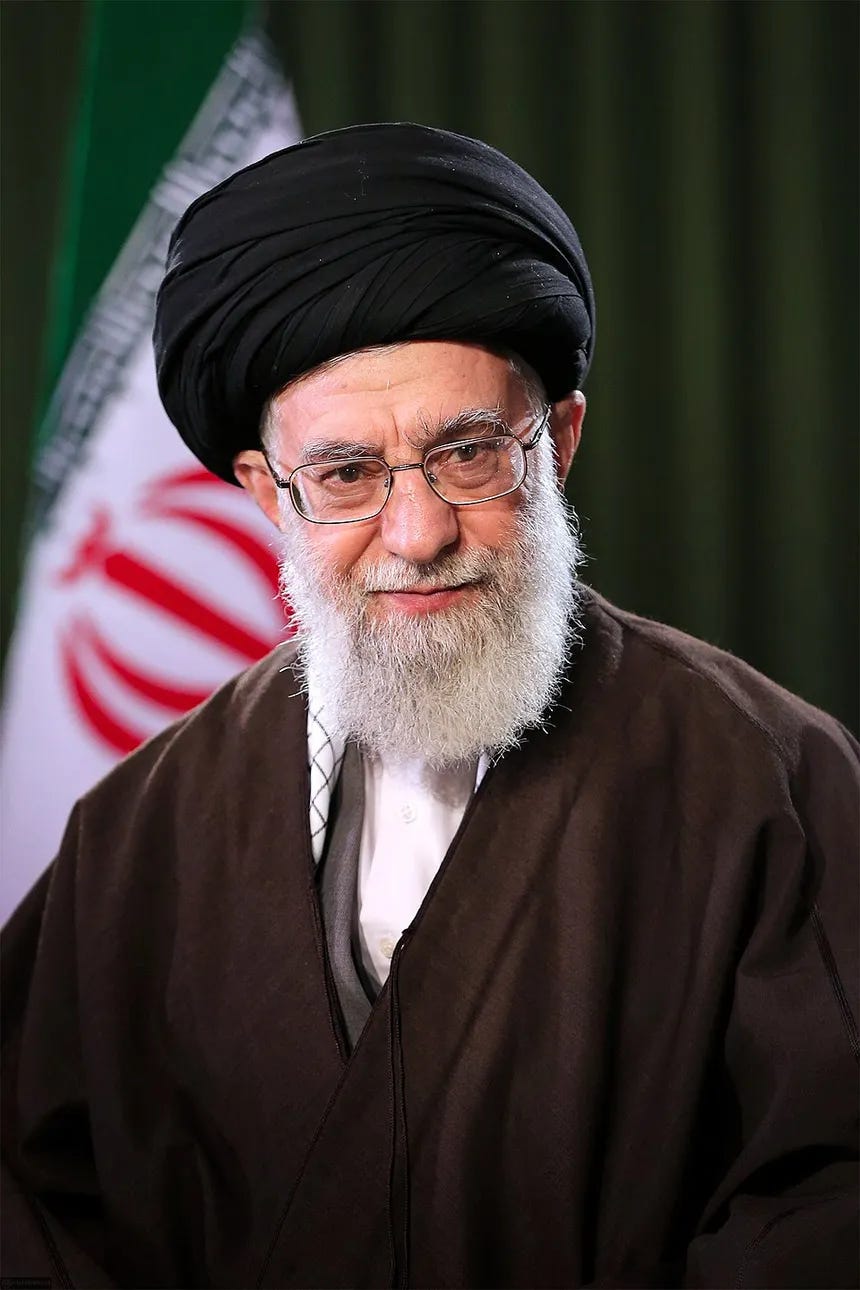
In 1979, the Shah was forced into exile in Paris, and the power vacuum was filled by Ayatollah Khomeini, transforming Iran into an anti-American theocracy.
Part III: The Nuclear Pendulum (2013–2025)
Following decades of sanctions between Persia and the West, the relationship briefly shifted under President Obama with the 2015 JCPOA. The deal was simple: Iran dismantles its nuclear infrastructure in exchange for the lifting of oil and financial sanctions.
However, in 2018, President Trump unilaterally exited the deal, citing “Maximum Pressure.” He argued the deal was flawed because it didn’t address ballistic missiles or regional proxies. This set the stage for a years-long descent into the “12-Day War” of Summer 2025.
The 2025 Trigger: In June 2025, reports indicated Iran was at “breakout capacity”—days away from 90% enriched uranium.
The Conflict: A coalition launched surgical strikes on enrichment facilities at Natanz and Fordow. While successful in setting back the nuclear program, it solidified the “Resistance” hardliners within Tehran.
Part IV: The 2026 Escalation
As soon as the U.S. military operation in Venezuela concluded in January 2026, the world’s attention pivoted back to the Middle East. A massive buildup of U.S. ships and troops followed.
Part V: The Puppet Master’s Grip
The most tragic element of the current conflict is that it didn’t have to happen. Reports from inside the White House indicate that Donald Trump was initially hesitant to pull the trigger on a “mystery war” with no clear exit strategy. He had signaled for months that he wanted a deal, famously stating that Iran could end the tension with just seven words: “We will never have a nuclear weapon,” which they indeed said multiple times.
But in the end, it wasn’t Trump’s “America First” policy that won out—it was Israel’s.
As Secretary of State Marco Rubio admitted to reporters, the U.S. launched these strikes primarily because we knew Israel was going to act first, no matter what. The administration’s logic was twisted: if Israel hits Iran, Iran hits the U.S. Therefore, the U.S. decided to hit Iran first to “preempt” the retaliation for a strike we didn’t even want to start. Why must the US lose soldiers for a foreign country? Doesn’t sound like a good ally. If you need another reason to question our special ally look at the USS Liberty Bombing.
The Fallout: Lebanon and the Gulf
The killing of Ayatollah Khamenei has shattered regional stability:
Lebanon: Hezbollah struck Israel in retaliation for their benefactor’s death. Israel instantly responded by ordering the evacuation of nearly 60 Lebanese towns and launching a massive bombing campaign.
The Gulf Oasis: Perhaps most shocking is Iran’s decision to strike the UAE, Qatar, Kuwait, Bahrain, and Saudi Arabia. These nations, long seen as an “oasis of stability,” are now under fire.
The Energy Crisis: The strike on Qatar forced the closure of its Natural Gas Refinery, which produces 20% of the world’s LNG and a staggering 40% of British LNG.
Paradoxically, the European Union may be forced to ask Ukraine to allow Russian fuel to pass through to keep the lights on. As Saagar Enjeti (host of Breaking Points) noted, “The Kremlin is doing backflips.” Most ironically, the killing of Ali Khamenei actually caused a ‘rally around the flag’ effect. That is, it has increased hatred of the US and Israel in Iran, and made everyone more passionate. Iran has said they are willing to lose 90% of their population to ensure they don’t get conquered. Are we prepared to make a sacrifice like that? I genuinely want to know from each reader, how many US Soldiers need to die before you think, ‘hmm maybe we shouldn’t be involved here?’ And I know some people will say, ‘But Iran wanted nukes!” Honestly, the Middle East would be more peaceful if they had them. Has anyone heard from North Korea since they got one? No, they leave us alone, and we leave them alone. Mutually assured destruction is extremely powerful.
Part VI: The Shadow of the Crown
In a startling twist, the wife of the late Shah has emerged from her Paris exile to announce that her son, Reza Pahlavi, is preparing to return to Iran. Pahlavi, the last Crown Prince, is longtime friends with Miriam Adelson, the Zionist donor who contributed $200 million to the Trump campaign. Adelson and her husband, owners of the parent company of The Venetian in Las Vegas, are both dual citizens of the US and Israel. They have spent their lives advocating for Israel, including spending a lot of time with leaders of Israel.
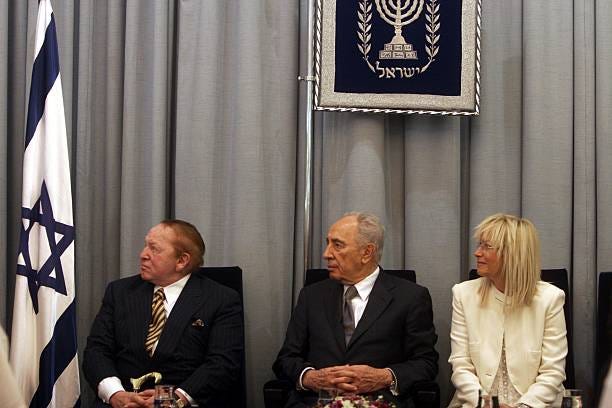
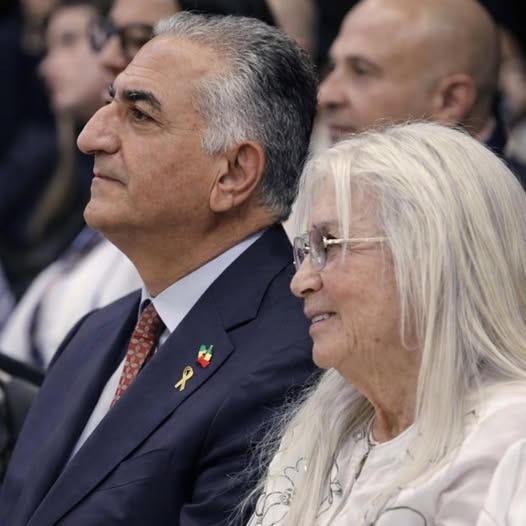
Pahlavi has promised to open the country to foreign investment and become a steadfast ally to Israel. This move has led many to believe that the “mystery war” was never about nuclear breakout or missiles, but about regime change—installing a leader loyal to Israeli interests.
Interestingly, it has been revealed that days before his death, Khamenei had actually agreed to a deal even more stringent than the 2015 JCPOA, which would have allowed full U.S. inspections. It was rejected.
Part VII: Israel’s Lust for Land and Blood
Israel’s goal, an open secret but sometimes confirmed by various Israeli officials is to take the land from the Nile to the Euphrates. In Genesis 15:18 God promises the land of Canaan to Abraham and his descendants, stating it stretches ‘from the river of Egypt to the great river, the Euphrates.’ Look at this map of current-day Israel, versus what is called ‘Greater Israel:’
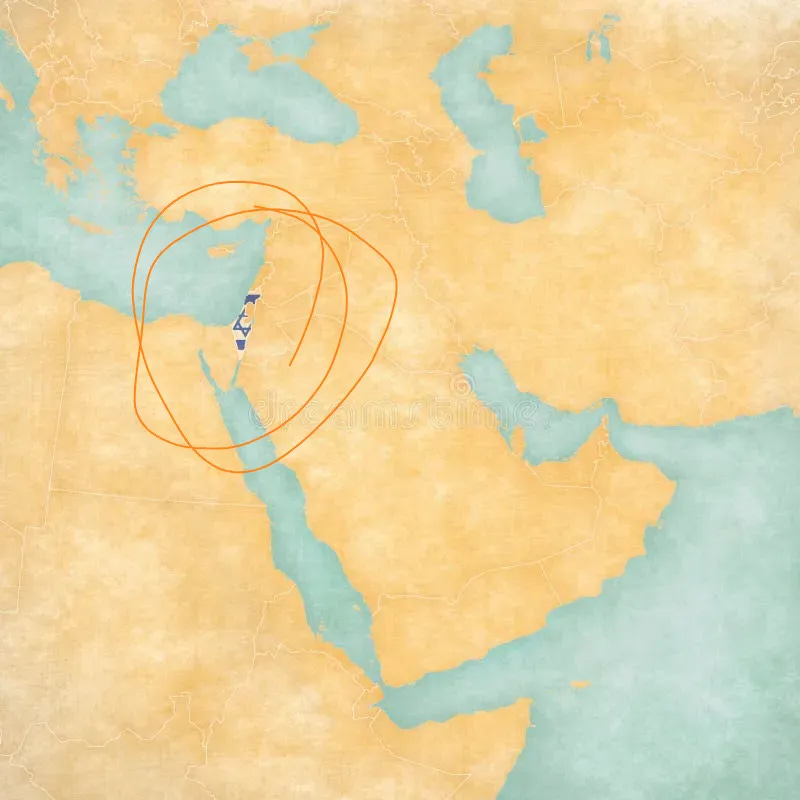
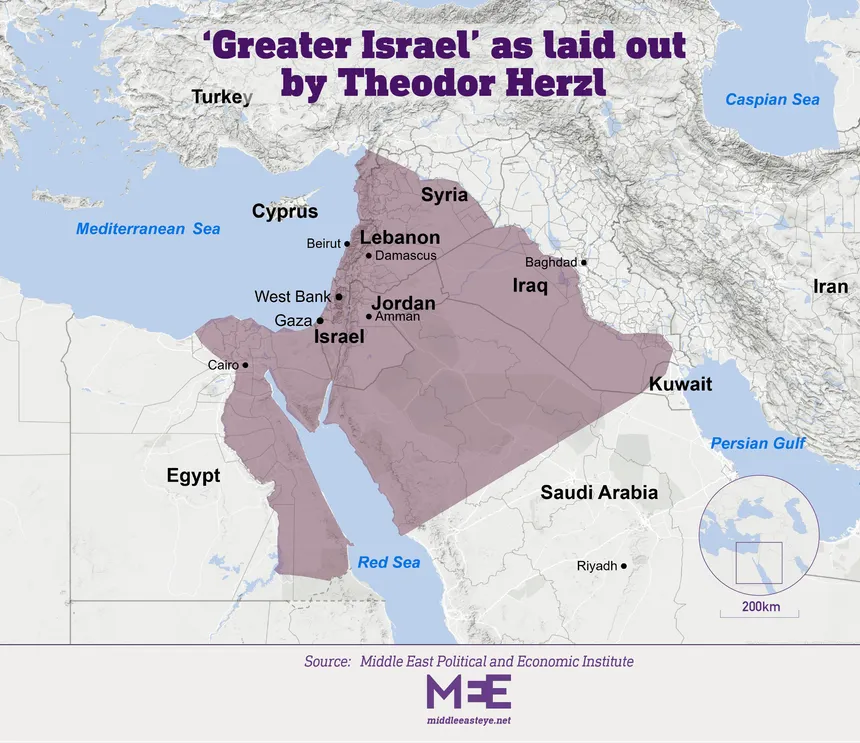
If you will notice, Syria and Iraq are part of ‘Greater Israel.’ Just to be clear, the same people pushing for war in Iran are the same ones that wanted war in Syria and Iraq. The goal, which succeeded, was to destroy Syria and Iraq so they could never resist Imperialism by Israel. As for Iran, Iran was the only country that would check Israel, and if they ever got Nukes, you can forget about Greater Israel. So the US comes in to save the day. One thing is for sure, no matter how many US Troops die, Israel will lose many, many less, if any.
Conclusion: Moving Goal Posts
When Conservative commentator Matt Walsh questioned the administration’s endgame, the Press Secretary stated that the U.S. would remain until Iran’s navy, missile launchers, and “IED capabilities” were destroyed.
The flaw in that logic is inherent in the name: Improvised Explosive Device. As history from 1953 to 2026 has shown, you can destroy a navy, but you cannot stop a population from improvising.
A Warning to the Reader
As you watch the coverage of this conflict, look closely at who is speaking. Every single major news station—MS Now, CNN, Fox News, ABC, CBS, CNBC—has fallen into lockstep. They have transitioned from “news” to war-time propaganda overnight. None of them are asking the crucial questions: What is the endgame? How much is this costing? Why are we fighting a war on behalf of a foreign power?
Instead, they are feeding you a curated feed of strike footage and war propaganda.
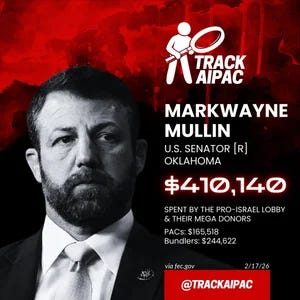
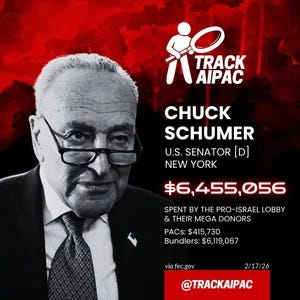
And don’t be fooled by the “dissent” coming from across the aisle. Any Democrat you see on TV claiming to be “against the war” isn’t actually against the war itself—they are against how it happened. They’ll argue about “proper notification” to Congress or that Congress must declare war (true, but beside the point) but when it comes to the actual destruction of Iran and the sacrifice of American soldiers, they are in total agreement with the administration. Surely it couldn’t have to do with the fact that ~90% of Congress takes money from the Israel Lobby. Who was Biden’s biggest donor? Israel Lobby. Trump’s biggest donor? Israel Lobby. So when these people tell you something, remember they don’t work for you or care about you. I didn’t care that much about political contributions until I heard the analogy that there will be a line around Chick-Fil-A if they offer a free Ice Cream Cone with a meal. So if people will line up for a free $3, you don’t think politicians would line up and kiss the Western Wall of Jerusalem for a few million dollars?
Stay skeptical and remember that just because the headlines change, the bodies being sent home do not.